
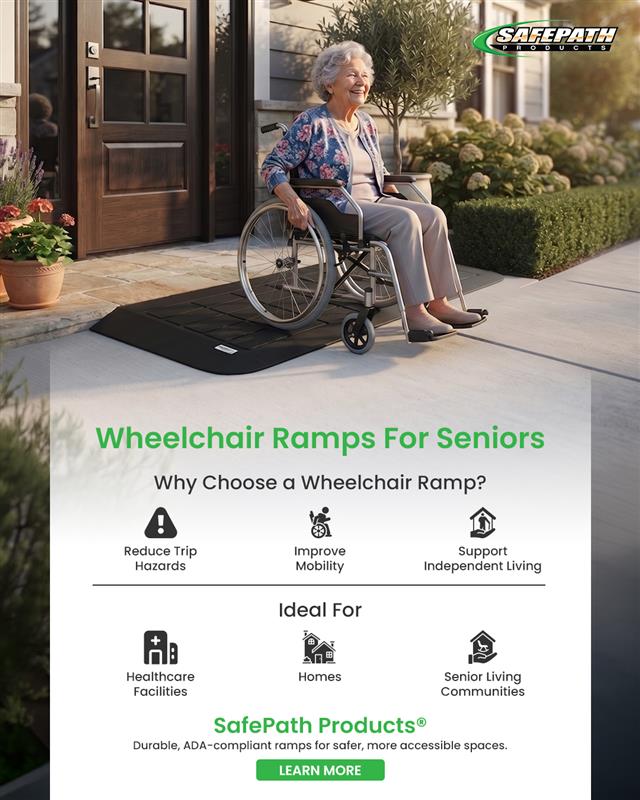
What Families and Caregivers Should Know When Choosing a Wheelchair Ramp for Seniors
When a family member first starts using a mobility device, one of the first concerns is how to make the home safer and easier to get around. A properly installed wheelchair ramp improves safety and reduces the risk of trips and falls.
Falls are a serious concern for older adults. According to the CDC, about one in four people age 65 and older falls each year, with millions visiting emergency rooms because of fall-related injuries. A simple ramp can help reduce some of the common hazards around the home, such as a raised doorway threshold or a single step at the entrance.
This guide walks through how to choose ramps for seniors, how to measure correctly, what ADA guidance says, and how to decide between a portable and a permanent solution. Most of it applies whether you are helping one parent at home or planning accessibility upgrades across an entire property.
Why Even a Small Step Becomes a Problem
A raised threshold is not just a bump in the floor. For someone using a walker, a wheelchair, or a rollator, an inch of rise can catch a front caster, stop a walker mid-stride, or force a caregiver to lift and pivot in a doorway.
The rule most people have never heard of is useful here. Under general accessibility guidance, any change in level greater than half an inch along an accessible route needs to be ramped. Anything from a quarter inch to a half inch should at least be beveled. Below a quarter inch, no treatment is needed.
Measure the threshold before you assume it is fine. Most exterior door thresholds fall right in the range that needs attention.
How to Measure for a Threshold Ramp
Take three measurements before you shop. Getting any one of them wrong is the most common reason a ramp arrives and does not fit.
Step 1. Vertical rise. Measure from the ground or floor surface up to the top of the threshold. Check at three points, the hinge side, the strike side, and the center of the door. If the readings differ, use the lowest one and plan to shim up from there.
Step 2. Door width. Measure the full opening the ramp needs to covered. A ramp narrower than the doorway creates new edges to catch on.
Step 3. Door swing clearance. Open and close the door with a tape measure or a flat object at the threshold. If the door sweeps across where the ramp will sit, you need a low-profile ramp or a design that clears the swing.
One more thing worth checking is what the ramp will sit on. A cracked, sloped, or crowned surface changes which ramp material will work because some materials conform to an uneven substrate, while others sit rigid on top of it.
Rubber, Composite, or Aluminum: Which Material Fits?
There is no single right answer. The setting decides it.
Recycled rubber. Heavy enough to stay put by weight alone in many installations. Naturally slip-resistant, does not corrode, and can be cut to size on site. Handles weather and daily traffic well. A common choice for busy entrances and for anyone who wants a quick, easy solution.
Recycled composite. Lightweight but strong, and it conforms to modest crowns and slopes at the threshold rather than sitting rigid on top of them. Will not freeze or turn slick in wet or cold conditions the way metal does. Cuts and notches with ordinary power tools, so an odd door jamb is not a problem.
Aluminum. Light, rust-proof, and often adjustable for height. The tradeoff is that metal conducts cold, can get slippery when wet or icy, and sometimes needs hardware to install.
For senior entrances that see rain, snow, or ice, surface behavior in bad weather usually matters more than raw strength. That is where rubber and composite tend to pull ahead of metal.
What Features Actually Matter
Good ramps for seniors are sturdy, easy to use, and built with accessibility in mind. Features like slip-resistant surfaces, ADA-friendly designs, resistance to weather elements, and long-lasting materials ensure good performance. Ramps made from recycled rubber are often preferred because of their great traction, low maintenance needs, and superior performance indoors and outdoors.
Beyond the material, run through this checklist before buying.
- Surface texture. Molded traction pads or a textured finish that keeps grip when wet
- Beveled edges. So, a wheel or walker tip can approach from any angle without catching
- Drainage. Outdoor ramps need channels or ridges to shed water instead of pooling
- Weight ratings. Confirm it covers the heaviest user plus a power chair or scooter
- Low-profile fits. The ramp should not block the door from opening normally
- Color and finish. A ramp that blends with the entrance is one the household will actually keep
How Are Ramps for Seniors Installed?
Installation depends on the entrance, the threshold height, and whether the setting is residential or commercial. A well-designed ramp should create a seamless, low-profile transition that does not require major structural changes in most cases.
For a typical threshold ramp, the sequence looks like this.
- Confirm your three measurements: rise, width, and door swing
-
Match the material to the setting, indoor or exposed, light use or daily power chair traffic
- Cut or notch the ramp if the doorway needs it
-
Set the ramp snug against the threshold with no gap
-
Secure it according to the product instructions, whether that is weight, adhesive, or fasteners
- Roll a wheelchair or walker over it before you call it done
For larger or multi-unit projects, SafePath Products® offers a dedicated design team that helps lay out each project in advance, so installers can complete the work correctly the first time with fewer delays or errors.
Slip Resistance and Material Durability
Slip resistance is one of the most important safety factors for any ramp at a senior entrance, especially where it is exposed to rain, snow, or heavy foot traffic. SafePath Products® ramps are made from 100% recycled materials, which support durability, low maintenance, and consistent traction in both indoor and outdoor settings. Slip-resistant surface technology, such as our StoneCap™ coating, helps maintain traction in wet or high-traffic conditions.
Ramps built from recycled rubber tend to hold up well against weather and repeated wheelchair or walker use.
FREE SENIOR GUIDE
Measure for the Right Wheelchair Ramp with Confidence
Download our free guide to learn how to measure your threshold and identify the right ramp size for a safer, more accessible entrance.
Threshold Ramps for Senior Living and Commercial Projects
Senior living communities, hospitals, and multi-family housing properties often need more than a single ramp. These projects call for consistent, code-compliant wheelchair threshold ramps installed across many entrances, hallways, and common areas.
Safe ramps for seniors in a commercial setting need to hold up to daily traffic from residents, staff, and visitors, which makes durability and slip resistance just as important as the initial installation. A single unsafe threshold repeated across dozens of units becomes a property-wide liability, which is why many facility managers standardize one ramp system for every entrance.
Frequently Asked Questions
The best ramps for seniors are ADA compliant, slip-resistant, and built from durable, low-maintenance materials.
- Look for a gentle slope, a stable non-slip surface, beveled edges, and construction suited to both indoor and outdoor use.
-
Recycled rubber is a common choice because it holds up well to weather and daily traffic.
SafePath Products® builds its EZEdge® and BigHorn™ threshold ramps to that standard, using 100% recycled materials and a slip-resistant StoneCap™ surface, all made in the USA.
Yes, ADA ramps must meet set slope, width, and surface requirements.
- General guidance calls for one inch of rise per 12 inches of ramp, a minimum 36-inch clear width, and a stable, slip-resistant surface. Handrails are usually required above a 6-inch rise, with level landings at both ends.
-
Private homes are not legally bound by ADA standards, but following them is still safer. SafePath Products® ramps are designed with these standards in mind.
SafePath Products® builds its EZEdge® and BigHorn™ threshold ramps to that standard, using 100% recycled materials and a slip-resistant StoneCap™ surface, all made in the USA.
No, a properly fitted threshold ramp stays put during normal use.
- Dense recycled rubber and composite ramps are heavy enough to resist shifting on their own
- BigHorn™ Ramps include peel-and-stick adhesive tape at no charge for a secured fit
- Correct sizing matters most, since a ramp that does not sit flush against the threshold is the one that moves
It shouldn’t, as long as you check the door swing before you order. A door that opens over the ramp needs enough clearance underneath, so a low-profile ramp is usually the safer choice.
Blocked doors are one of the most common installation mistakes. To test the clearance, place something flat and about the height of the ramp at the threshold, then open and close the door to make sure it clears.
- Measure the gap under the door at its lowest point
- Confirm the ramp height fits under that swing
- Where it does not, a ramp on the outside of the door is usually the answer
BigHorn™ Ramps sit at a standard 1 1/4-inch height and can be cut or notched on site to clear door jambs and molding.
You should choose a permanent ramp for any entrance used every day, and a portable ramp only for short-term use or travel.
- Portable suits temporary recovery, travel, or a threshold that changes often
- Permanent suits a primary entrance, daily use, and weather exposure
- No setup is needed. A fixed ramp is always in place, which matters if the person lives alone
SafePath’s BigHorn™ and EZEdge® threshold ramps install once and stay put.
Yes, threshold ramps can be used outdoors in rain and snow, but the material you choose makes a big difference to how safe they stay in wet or icy conditions.
- Rubber and recycled composite keep their grip in wet and cold conditions and will not freeze the way metal can
- Check for drainage so water sheds instead of pooling
- Inspect after storms and freeze cycles
SafePath ramps use a StoneCap™ ceramic-coated quartz surface built to hold traction in the harshest conditions, and they will not freeze or turn slick like aluminum.