
Your wheelchair ramp is more than just an access point. It’s a critical part of everyday accessibility. Whether installed at home, a commercial facility, or any public setting, only a well-maintained ramp ensures safe and smooth mobility for everyone who relies on it.
But like any highly used surface, even the most durable rubber wheelchair ramps like SafePath Products® EZEdge™ Wheelchair Ramps and BigHorn™ Ramps may need regular maintenance to perform at their best.
Routine wheelchair ramp maintenance directly impacts the following areas.
- User safety by preventing slips, trips, and falls
- ADA compliance for commercial and public spaces
- Product lifespan, especially for high-traffic areas
- Cost savings by avoiding early replacements
You don’t require complicated tools or constant attention to keep your ramp in peak condition, just a few smart habits.
How to Maintain a Wheelchair Ramp?
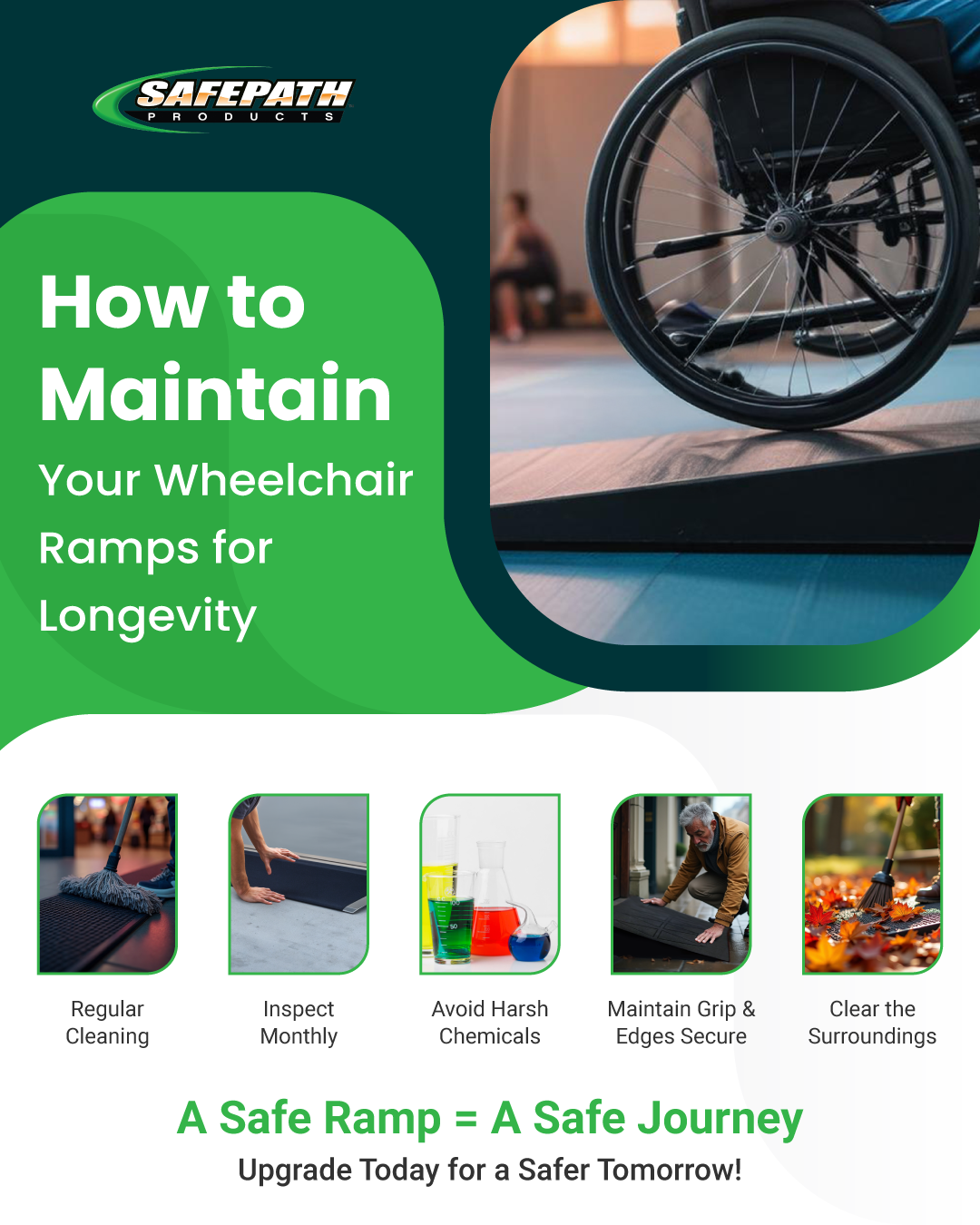
Wheelchair ramp maintenance mainly comes down to five simple habits performed on a regular schedule.
1. Keep Your Ramp Clean and Debris-Free
Cleaning plays a vital role in maintenance, especially in outdoor environments, as dust, leaves, mud, and moisture can quickly turn your ramp into a slipping hazard.
Best Practices
- Sweep your ramp weekly to remove loose debris.
- Wash with water and mild soap for deeper cleaning.
- Pay extra attention to corners and edges.
Rubber ramps like CourtEdge™ Reducer Ramps and TurfEdge™ Reducer Ramps are made with textured surfaces to provide traction.
Keeping them clean ensures that grip stays strong and effective all year round.
2. Inspect Your Ramp for Any Cuts or Wear
Even the most heavy-duty ADA compliant ramps develop wear over time, especially in commercial or high-traffic environments. Catching small issues early supports wheelchair ramp safety and helps you avoid bigger problems down the road.
What to Look For
- Cracks or surface damage
- Uneven sections or chipped edges
- Strength of adhesives or fasteners
Monthly inspections help you avoid costly repairs and replacement. This kind of ramp maintenance ensures your ramp remains safe and continues to fulfill its purpose.
3. Avoid Harsh Chemicals That Damage Materials
Using strong cleaning chemicals might seem effective, but they can weaken rubber materials and damage the protective coatings.
Instead, keep these tips in mind.
- Use non-abrasive, pH-neutral cleaners
- Avoid bleach or solvent-based products
- Rinse thoroughly after cleaning
This is especially important for ramps where surface quality and finish are key to both performance and appearance.
4. Maintain Grip, Traction and Edge Stability
One of the biggest advantages of recycled rubber ramps is their natural grip. However, its effectiveness may get reduced due to dirt buildup or improper installation. Consistent ramp care keeps that traction working the way it should.
Maintenance Tips
- Keep textured surfaces clean and dry
- Ensure edges sit flush with the ground
- Reposition or secure if necessary
Products like BigHorn™ Ramps are built for high-traffic durability. Regular checks ensure that they continue to perform under pressure.
5. Don’t Forget Modular Components and Landings
If you’re using modular systems like EntryLevel™ Landings, maintenance becomes even more important, as multiple connection points may need frequent monitoring.
Check For
- Stability between sections
- Proper alignment
- Secure fittings and connections
Well-maintained modular ramps offer flexibility, easy reinstallation, and long-term reliability.
Why Choose SafePath Products® Rubber Ramps?
SafePath Products® are engineered for long-term performance with minimal maintenance, thanks to the following features.
- 100% recycled tire rubber construction
- Built-in slip-resistant surfaces
- Weather-resistant durability
- Advanced coating technology for color retention and strength
Every SafePath Products® ramp is also fully ADA compliant, giving facility managers and property owners confidence that their accessibility ramp maintenance program supports both safety and compliance requirements.
Wholesale and Bulk Orders for Commercial Wheelchair Ramp Projects
SafePath Products® supports wholesale pricing, bulk orders, and custom architectural layouts for commercial wheelchair ramp maintenance and installation projects.
Architects, contractors, facility managers, and procurement teams often need more than a single ramp. Our team works directly with commercial buyers to plan layouts, coordinate bulk orders, and support wholesale purchasing for larger accessibility projects.
To help projects go smoothly, our design team lays out custom architectural configurations for error-free installation, so your ramps fit the space correctly the first time.
If you manage wheelchair ramp maintenance across multiple sites, our team can help you standardize products, timelines, and support across every location.
FAQ
1. What is the best way to clean a wheelchair ramp?
Wash the ramp with water and a mild, pH-neutral soap.
- Avoid bleach or solvent-based cleaners, which can weaken rubber
- Rinse thoroughly and let the surface dry
- Pay close attention to corners and edges where debris collects
2. How often should a wheelchair ramp be inspected?
Inspect your ramp monthly for cracks, uneven sections, chipped edges, and loose fasteners. Catching small issues early helps you avoid costly repairs and keeps the ramp safe for everyone who relies on it.
3. How do you maintain traction on a wheelchair ramp?
Keep the ramp’s textured surface clean and dry, remove dirt and debris regularly, and make sure the ramp edges sit flush with the ground. Dirt buildup, moisture, and improper positioning can reduce effective traction.
4. How can you extend the life of a wheelchair ramp?
Regular cleaning, monthly inspections, proper traction maintenance, and avoiding harsh chemicals can help extend a wheelchair ramp’s service life. Addressing small signs of wear before they become larger problems can also help reduce the need for premature repairs or replacements.
5. Why does regular ramp maintenance matter?
Regular maintenance protects user safety, helps facilities maintain ADA compliance, and extends the life of the ramp. A little consistent care goes a long way toward avoiding early replacements and unexpected repair costs.
6. Are wheelchair ramps from SafePath Products® ADA compliant?
Yes, SafePath Products® ramps are built to support ADA compliance for commercial and public spaces.
- Routine wheelchair ramp maintenance helps ramps continue meeting ADA standards over time
- Regular inspections help catch issues that could affect compliance
7. How do I know if my wheelchair ramp needs repair or replacement?
Look for cracks, uneven sections, chipped edges, or loose adhesive during monthly inspections.
- Small issues caught early can often be repaired
- Ongoing wear in high-traffic areas is the most common reason ramps eventually need replacement